


Groundwater Survey and Borehole Drilling Services in Gauteng
Better boreholes start with better site selection. Groundwater surveys help identify promising drilling positions before the rig arrives.
A successful borehole starts before the drilling rig reaches your property. Groundwater surveying helps identify promising drilling positions, while professional borehole drilling confirms what lies below the surface and turns that information into a usable water source.
Tomahawk Borehole Drilling provides groundwater survey and borehole drilling services in Gauteng for residential, agricultural, commercial and industrial properties. From geological surveying and borehole siting to drilling, casing, yield testing and pump installation, each stage is planned around the conditions found on the property.
Groundwater Survey Services Before Borehole Drilling
A groundwater survey is used to assess where drilling has the best potential on a particular property. It doesn’t simply identify a convenient open space and mark a drilling point.
The survey considers the geology beneath the site and looks for underground structures that may store or transmit groundwater. Depending on the property and survey method, this can involve geological information, local borehole records, field observations and geophysical measurements.
Surveyors may look for fractures, faults, weathered rock and geological contacts that could provide pathways for groundwater.
The purpose is to make the borehole siting decision using relevant site information before drilling starts.
How Groundwater Surveys Help Select a Borehole Position
Groundwater isn’t usually found in large open underground lakes. In many Gauteng areas, water moves through cracks, fractures, joints and weathered sections of rock. These structures can vary significantly across relatively short distances. A neighbouring property may have a productive borehole, yet the same water-bearing fracture may not continue across your stand.
Groundwater surveying helps identify changes below the surface that could indicate more favourable drilling conditions. A suitable drilling position must also work practically. The drilling rig needs access, and the location should allow for future pump servicing, pipework, electrical connections and connection to storage tanks or irrigation systems.
A good borehole position therefore needs to make sense both below and above ground.
Geological Surveys for Boreholes in Gauteng
Geological conditions differ across Gauteng, which is why the same drilling approach can’t simply be applied to every site. A geological survey assesses the rock formations and structures that may influence groundwater occurrence. Factors such as fractured rock, fault zones, weathering and boundaries between different geological formations can all affect where groundwater may be encountered.
Existing borehole information from the surrounding area can also provide useful context. Historical drilling depths, water strike depths and borehole yields may help build a broader picture of local groundwater conditions.
This information does not guarantee that another borehole will behave in exactly the same way, but it can support better site planning.
Geophysical Groundwater Surveying
Geophysical surveys investigate differences beneath the ground by measuring physical properties from the surface.
Electrical conductivity, resistivity and other geophysical methods can help reveal changes in underground formations. These changes may indicate fractured, weathered or structurally different zones that deserve closer attention as possible drilling targets.
The equipment does not produce a direct image of water beneath the property. It records measurements that need to be interpreted alongside geological information. This is why the quality of the survey depends on both the equipment used and the experience of the person interpreting the results.
Can a Groundwater Survey Guarantee Water?
No professional groundwater survey can guarantee that drilling will produce a specific amount of water. A survey identifies areas with better geological potential, but the actual underground conditions are only confirmed once drilling begins. A promising structure may contain a strong water source, a smaller yield or very little usable groundwater. Water could also be encountered deeper than expected.
The value of the survey lies in reducing uncertainty before the drilling rig is positioned, rather than promising a result that cannot be confirmed from the surface.
Borehole Drilling Services After the Survey
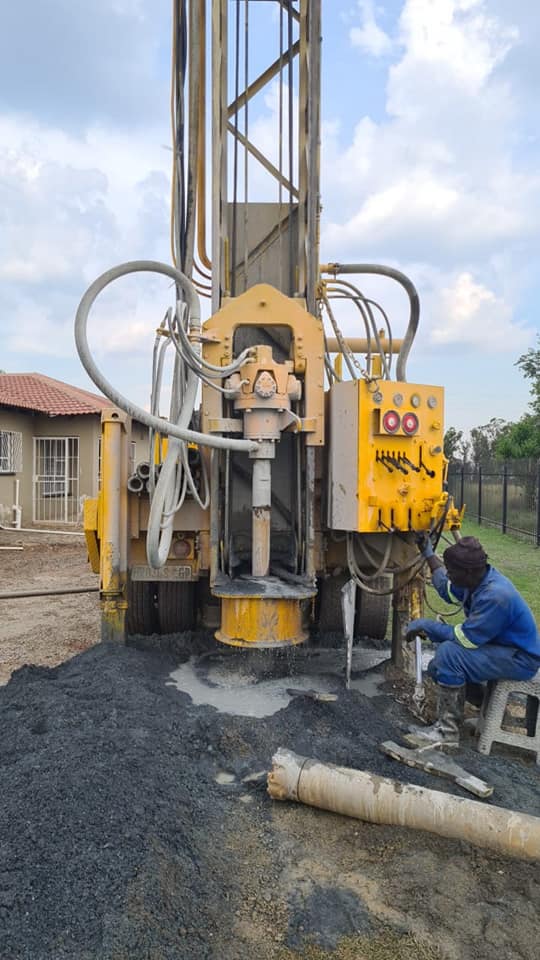
Once a potential drilling point has been selected, the borehole drilling process can begin. The drilling team works through the different geological formations beneath the property while recording changes in rock and any water strikes that occur.
The final drilling depth isn’t always known beforehand. A borehole may encounter groundwater relatively early, while another may need to continue deeper to intersect a more productive water-bearing fracture.
Ground conditions also affect the drilling process. Different formations can influence drilling speed, equipment requirements and the amount of casing needed. This is why borehole drilling prices and installation requirements can differ from one property to another.
What Happens When Water Is Found?
Finding water during drilling is an important stage, but it doesn’t mean the borehole installation is complete. A water strike shows that groundwater has entered the borehole. There may be one water strike or several at different depths.
The drilling team may continue deeper if the first strike doesn’t appear sufficient for the intended water requirement. Once the borehole is complete, the next question is how much water it can reliably supply. That requires borehole yield testing.
Borehole Yield Testing
Yield testing measures how the completed borehole performs when water is pumped from it. It provides information about the rate at which the borehole can deliver water and how the water level recovers during and after pumping. This data becomes important when planning the rest of the borehole installation.
A property using water mainly for garden irrigation has different requirements from a farm, factory, school or commercial site needing larger volumes. Yield information helps ensure that the pump and water system are matched to the borehole’s actual performance.
Borehole Pump Installation
Once the borehole depth, water level and yield are known, a suitable submersible pump can be selected. Pump selection depends on several factors, including the depth of the borehole, pumping level, required flow rate, distance to the point of use and the property’s water demand.
A larger pump isn’t automatically better. If the pump draws water faster than the borehole can recover, the system may perform poorly or place unnecessary strain on the equipment.
Tomahawk Borehole Drilling can handle the pump installation as part of a complete borehole project, allowing the equipment to be selected according to the information gathered during drilling and testing.

Our Turnkey borehole drilling services include:
Dowsing
Geological Survey
Geotechnical Drilling
Water Borehole Drilling
Borehole Maintenance and Recovery
Monitoring Borehole Drilling
Yield Testing
Site Planning
Complete Pump Installations
Water Quality Testing
Filtration Systems
Our Turnkey borehole drilling services include:
Dowsing
Geological Survey
Geotechnical Drilling
Water Borehole Drilling
Borehole Maintenance and Recovery
Monitoring Borehole Drilling
Yield Testing
Site Planning
Complete Pump Installations
Water Quality Testing
Filtration Systems
Call us on 073 353 8239

Groundwater Surveys for Residential Boreholes
Homeowners commonly install boreholes for garden irrigation, swimming pools, toilet supply, washing and backup water. A residential groundwater survey helps determine where drilling should take place before the drilling rig is positioned.
The survey and borehole installation can then be planned around the property layout, intended use of the water and future equipment requirements. If borehole water will be used inside the home, water quality testing may also be required before deciding whether filtration or treatment is needed.
Agricultural Groundwater Surveys and Borehole Drilling
Farms and smallholdings can have much higher groundwater requirements than residential properties. Boreholes may supply livestock, irrigation, cleaning and general farm operations. In these cases, finding groundwater is only part of the requirement. The borehole also needs to provide a suitable yield for the intended use.
Agricultural groundwater surveys can help select possible drilling positions across larger properties, while yield testing provides the information needed to plan pumping and storage. Water demand should be considered before selecting the final pump, tank capacity and irrigation system.
Commercial and Industrial Borehole Surveys
Businesses increasingly consider boreholes for backup water, landscaping, cleaning, toilets, workshops and operational water requirements.
Commercial and industrial properties can require significant water volumes, so the borehole needs to be planned as part of the site’s wider water system.
A groundwater survey helps select the drilling point. Once drilling is complete, yield testing, pump selection, storage capacity and water quality can be assessed. Depending on the intended use, the installation may also require tanks, pressure pumps, pipework and filtration.
Turnkey Borehole Drilling Services
Tomahawk can assist with:
Dowsing and site planning, geological survey work, geotechnical drilling, water borehole drilling, monitoring borehole drilling, yield testing, complete pump installations, borehole maintenance, water quality testing and filtration systems.
That means you don’t have to deal with several contractors for one borehole project. You can work with a team that knows the full process and can advise you properly from start to finish.
Groundwater Survey and Borehole Drilling Costs
The cost of a groundwater survey and borehole drilling project depends on the property and the scope of work required.
Factors that can affect the total cost include the survey method, drilling depth, geological conditions, casing requirements, borehole yield, pump size and additional equipment.
A complete project may include:
- Groundwater or geological survey
- Borehole siting
- Drilling
- Casing
- Yield testing
- Submersible pump
- Pump controls
- Pipework
- Electrical connections
- Water storage
- Pressure equipment
- Water quality testing
- Filtration
When comparing borehole quotations, check which of these services are included rather than comparing only the drilling cost per metre.

Groundwater Survey and Borehole Drilling in Gauteng
Tomahawk Borehole Drilling provides groundwater survey and borehole drilling services across Gauteng and the Vaal Triangle.
Services include geological surveys, borehole siting, new water borehole drilling, casing, yield testing, pump installation, borehole maintenance and recovery, water quality testing, filtration, geotechnical drilling and monitoring boreholes.
Projects can be planned for homes, farms, smallholdings, businesses and industrial properties.
You can also read more about Tomahawk’s borehole drilling process or view information about borehole drilling in the Vaal Triangle.
Book a Groundwater Survey and Borehole Drilling Assessment
A borehole represents a substantial investment, so choosing where to drill deserves proper consideration.
A groundwater survey gives the drilling team useful geological information before work starts. Once a suitable drilling point has been selected, the same project can move through drilling, casing, yield testing and pump installation. Tomahawk Borehole Drilling can assist with the complete process for residential, agricultural, commercial and industrial properties throughout Gauteng and the Vaal Triangle.
Contact Tomahawk Borehole Drilling to discuss a groundwater survey, borehole site assessment or new borehole drilling project.
Frequently asked questions about boreholes
The depth of a borehole in Vaal Triangle can vary depending on factors such as the geological conditions, water table levels, and the purpose of the borehole. On average, residential boreholes in Vaal Triangle can range from 30 meters to 100 meters deep. However, commercial or agricultural boreholes may be drilled even deeper, 150m, to access larger water reserves. Contact Tomahawk for borehole drilling services in Vaal Triangle.
The duration of borehole drilling can vary depending on several factors, including the depth, the type of rock formations encountered, and the drilling equipment used. Generally, residential borehole drilling can take anywhere from a few days to a couple of weeks. Complex or deep commercial boreholes may take longer to complete.
The cost of borehole drilling depends on various factors, such as the depth, the geological conditions, location, and additional services required. It’s best to contact our professional borehole drilling company in Parys for a detailed assessment and accurate cost estimate based on your specific needs.
Properly drilled and maintained boreholes should not negatively impact existing water sources, such as nearby wells or water bodies. However, it is crucial to consult with a our borehole drilling company in Parys to assess the hydrogeological conditions and provide guidance to minimise any potential impacts.
With proper maintenance and care, a borehole can last for several decades, around 20 to 50 years. Routine maintenance, regular water quality testing, and occasional repairs or upgrades to the pumping system can help ensure the longevity and optimal performance of the borehole.
Borehole water can be safe to drink, but it is essential to have the water tested periodically to ensure its quality. As a reputable borehole drilling company in Parys, we can provide guidance on water testing and recommend any necessary water treatment processes to maintain safe and potable water. Contact Tomahawk for borehole drilling services in Parys.
Yes, borehole water is often used for various non-drinking purposes such as irrigation, gardening, livestock watering, and industrial applications. Borehole water can be a valuable resource for fulfilling such needs and reducing dependence on other water sources.
Yes, in South Africa, you do require permission to drill a borehole. The process involves obtaining the necessary permits and complying with regulations set by the Department of Water and Sanitation (DWS). These regulations are in place to ensure responsible water usage and management.
In most cases, it is possible to drill a borehole in various locations. However, geological conditions, accessibility, and any restrictions imposed by local authorities or landowners may affect the suitability of a particular location. Tomahawk, professional borehole drilling company in Parys, can assess the site and advise on the feasibility of drilling a borehole.
Regular maintenance for a borehole includes visual inspections, pump maintenance, checking water quality, and periodic cleaning to prevent clogging. It is recommended to have a professional borehole maintenance service to ensure the continued performance and longevity of your borehole system in Parys.
Get in touch with the team at Tomahawk today to get the ball rolling on your borehole drilling services in Parys, to enjoy having a fresh and reliable water source when you need it!
We are also leading borehole drilling company in the following areas:
Borehole Drilling in Parktown
Borehole Drilling in Randburg
Borehole Drilling in Roodepoort
Borehole Drilling in Sandton
Borehole Drilling in Springs
Borehole Drilling in Vereeniging
Borehole Drilling in Vredefort
Borehole Drilling in Woodmead
